



REVESCO. Revista de Estudios Cooperativos. ARTÍCULOS
e-ISSN: 1985-8031
Melvin Sarsale
Faculty
of Business and Management, Southern Leyte State University (Filipinas) 

https://dx.doi.org/10.5209/REVE.106331 Recibido: 25/02/2025 • Aceptado: 22/10/2025 • Publicado: 12/01/2026
ES Resumen. Las cooperativas catalizan el desarrollo rural al fomentar la inclusión económica, la cohesión social y los medios de vida sostenibles. Aunque los modelos cooperativos reciben atención, este interés de investigación se origina dentro de la bibliografía. El análisis bibliométrico examina tendencias, contribuciones seminales y cambios temáticos relacionados con políticas. Sin embargo, la evaluación sistemática de la literatura académica sobre cooperativas y desarrollo rural sigue siendo limitada. Este estudio analizó las tendencias y el impacto de las citas utilizando datos de la base de datos Scopus. Para el análisis de citas, redes de coautoría y mapeo de palabras clave, se emplearon VOSviewer y Biblioshiny. Los resultados identificaron los autores, revistas e instituciones más influyentes, los principales temas que dominan la investigación y las áreas emergentes. Los resultados mostraron además a las cooperativas como instituciones receptivas en el proceso de reforma de la gobernanza, las finanzas inclusivas, la sostenibilidad y el empoderamiento rural, con nuevas áreas de interés en innovaciones comunitarias, turismo rural y transformación institucional. En América, Asia y Europa, se observa una creciente colaboración. Este artículo ofrece una visión integral sobre la investigación en cooperativas y desarrollo rural, lo que contribuye al desarrollo de modelos cooperativos, la formulación de políticas y la colaboración interregional.
Palabras clave. Cooperativas, desarrollo rural, análisis bibliométrico, gobernanza, sostenibilidad.
Claves Econlit. O13, O18, P13, Q01, R58.
ENG Cooperatives and rural development: A bibliometric analysis
ENG Abstract. Cooperatives catalyze rural development by supporting economic inclusivity, social cohesion, and sustainable livelihoods. Even though cooperative models receive attention, this research interest originates within the bibliography. Bibliometric analysis looks at trends, seminal contributions, and policy-related thematic changes. However, systematic appraisal of the academic literature is still lagging in the field of cooperatives and rural development. This study analyzed trends and citation impact using data from the Scopus database. For citation analysis, co-authorship networks, and keyword mapping, VOSviewer and Biblioshiny were applied. The outcomes showed the most influential authors, journals, institutions, the main themes dominating the research, and emerging areas. The results further depicted cooperatives as responsive institutions in the process of governance reform, inclusive finance, sustainability, and rural empowerment, with new areas of interest in grassroots innovations, rural tourism, and institutional transformation. Increasing collaboration is also evident across continents, including North America, Asia, and Europe. The paper provides a comprehensive overview of cooperatives and rural development research, helping to develop cooperative models, inform policymaking, and foster cross-regional collaboration.
Keywords. Cooperatives, rural development, bibliometric analysis, governance, sustainability.
Summary. 1. Introduction. 2. Methods. 3. Results. 4. Discussion. 5. Conclusions. 6. References.
How to cite: Sarsale, M. (2026). Cooperatives and rural development: A bibliometric analysis. REVESCO. Revista de Estudios Cooperativos, 152, e106331. https://dx.doi.org/10.5209/REVE.106331.
Cooperatives have always been regarded as institutions of paramount importance in rural development because of their collective economic and social benefits to communities (Ribas et al., 2022; Sarsale & Kilongkilong, 2020). Member-owned enterprises empower rural populations by opening avenues for better access to markets, financial resources, education, health, and infrastructure (Ranjbari et al., 2024). Cooperatives and rural development are interrelated, encompassing agriculture productivity, financial inclusion, employment generation, and community empowerment (Gava et al., 2021; Sarsale, 2019). The agricultural cooperatives have also played a significant role in achieving higher productivity by small farmers, obtaining credits, and selling their products at better prices (Tumenta et al., 2021). Financial cooperatives and cooperative banks have also helped achieve rural financial inclusion through relatively cheap credit and savings instruments for people experiencing poverty (Pasara et al., 2021). Beyond their direct economic functions, cooperatives and social capital share the characteristics of trust, collaboration, and local governance structures to promote sustainable rural development (Saz-Gil et al., 2021; Sarsale, 2020). Since this study explores the role of cooperatives in promoting rural development, it is essential first to clarify what rural development means in this context. In this paper, rural development is defined as “the improvement of the economic, social, and cultural conditions of a rural territory, with respect to the environment and in a manner that has positive repercussions for the quality of life of the resident population and integrates the territory with the whole of society“ (Guinjoan et al., 2016). This broad definition supports various contributions of cooperatives in rural development. With these multifaceted functions, analyzing the literature on cooperatives and rural development is essential in understanding how cooperatives have developed and how they influence rural economies.
Earlier review studies on cooperatives and rural development have discussed the different aspects of cooperative structures in relation to their impact and role in economic and social development. Bijman and Wijers (2019) discussed the literature review on producer cooperatives, emphasizing business models' inclusiveness. The study showed how cooperatives function as an integrated business model by providing small-scale farmers and producers with access to markets, resources, and collective bargaining. Tefera et al. (2017) discussed the emergence of agricultural cooperatives in Ethiopia and their effects on smallholders' productivity and market access. The study highlights cooperatives' persistent challenges as they transition from input-supply roles to commercialization and market integration. On the other hand, Qorri and Felföldi (2024) conducted a bibliometric review of agricultural marketing cooperatives across 364 publications from 1963 to 2023. Findings indicate an increasing scholarly interest in the functions of cooperatives in modernizing agricultural value chains and promoting sustainable rural economies.
Other studies adopted a governance perspective, focusing on the internal dynamics of cooperative organizations. Buang and Samah (2020) conducted a systematic review of 13 studies on cooperative board structures published from 2010 to 2019 to examine the structure and its efficacy in managing the cooperative enterprise. Their results highlight effective governance and management to realize cooperative efficiency and sustainability. On the other hand, Korzeb et al. (2024) performed a bibliometric review of 347 articles from 2010 to 2024 on cooperative banks and their environmental, social, and governance performance. Their findings illustrate how cooperatives contribute to sustainable finance and ethical investment based on the impact of cooperatives on the overall economy beyond the agricultural sector. Apart from this, Candemir et al. (2021) demonstrated the role of agricultural cooperatives in sustainable agriculture, inferring that they ensure environmental stewardship, resource efficiency, and long-term agricultural sustainability. Their review of the literature provides support for cooperatives in implementing sustainable agriculture and building resilience in their members' economies.
Various review studies have also surveyed the social and economic effects of cooperatives in different contexts. Marcis et al. (2019) developed a conceptual map from a systematic review of 20 studies to enable an evaluation framework for assessing the sustainability performance of agricultural cooperatives through organized environmental, economic, and social indicators. Saz-Gil et al. (2021) discussed rural and agricultural cooperatives and social capital, highlighting how cooperative membership builds trust, collective action, and collective resilience. Meanwhile, Su and Cook (2020) conducted a systematic review of 443 studies published between 2007 and 2017 on agricultural cooperatives in China, with a detailed consideration of cooperative development and policy implications. Similarly, Afranaa Kwapong and Hanisch (2013) reviewed the literature on the cooperative role in reducing poverty. The cooperatives' membership improves rural livelihoods mainly through access to financial services, training, and collective bargaining power. Moreover, Rena (2017) stressed that South African cooperatives create employment opportunities through extended service provision and increased social cohesion, benefiting both rural and urban populations. Collectively, these studies show how cooperatives affect rural development, economic empowerment, and community resilience in several ways.
While these review studies contribute to theoretical and empirical research into cooperatives, they rarely use bibliometric methods to quantify trends and scholarly networks. This paper fills this gap by systematically mapping the landscape of academic study on cooperatives and rural development and identifying key research patterns, dominant journals, influential authors, and emerging themes in the domain. Utilizing bibliometric analysis allows a data-driven perspective of the evolution of cooperative studies and their future direction.
Bibliometric analysis quantifies the range and scale, impact, and trajectory of research focused on a specific topic (Donthu et al., 2021). Analyses of publication trends, citations, key research networks, and bibliometric studies provide an exhaustive view of how academic interests relating to cooperatives and rural development have evolved. Studies in related disciplines have used bibliometric techniques to map the research landscapes of agricultural economics, social entrepreneurship, and community development (Qorri & Felföldi, 2024; Korzeb et al., 2024). Applying this methodology to cooperative studies provides an objective means to assess scholarly contributions, the influence of authors and journals, and the most cited works that shape discourse on cooperatives and rural development.
This paper developed a bibliometric review of studies on cooperatives and rural development. It seeks to uncover changes in publication volume over time and the geographical coverage of studies across the major thematic areas explored in this literature. It examines how knowledge regarding cooperatives and rural development has been produced and diffused through major research clusters and trends. Besides, the paper highlights research gaps and potential areas for future study to further ongoing discussions on how cooperatives can work for rural communities across various socio-economic settings. For this purpose, the present paper tries to answer the following research questions:
1. What is the overview of the bibliometric data on cooperatives and rural development?
2. What are this domain's most influential sources, authors, institutions, countries, and documents?
3. How are scholarly collaborations and citation relationships structured in this research area?
4. How have the key themes and topics in this field evolved?
This study used a bibliometric approach to systematically map the scholarly landscape of cooperatives and rural development. This technique identifies emerging trends, influential publications, and key contributors that are essential for keeping readers updated on recent advances (Donthu et al., 2021). It also detects and visualizes the trend of an emerging research pattern on the role of cooperatives in rural development with specific academic growth. Moreover, this methodological approach provides information on the historical development of the discipline, its structural arrangement, prominent research themes, journal influence, and citation dynamics (Hassan & Duarte, 2024), offering a holistic view of how cooperatives contribute to rural socio-economic transformation.
2.1. Data sourcing and specifications
This study used the Scopus core collection database to search for relevant literature for this bibliometric review. Scopus is one of the most comprehensive high-quality databases for bibliometric research (Singh et al., 2021). It covers a wide academic literature across various disciplines (Pranckutė, 2021) that can conveniently be consulted to map the research trend toward cooperatives' contributions to rural development. In addition, the database offers a wide range of standardized metadata fields, including top authors, highly cited papers, leading journals, institutional affiliations, influential keywords, country-wise contributions, and citation impact (Amiruddin et al., 2025), enabling robust analysis of research activity in this domain. This study tracks the historical evolution, thematic developments, and emerging trends in the field by considering literature published 2000-2025. Table 1 summarizes the specific search syntax and inclusion criteria used in the screening process.
Table 1. Data requirements of the bibliometric study.
|
Category |
Specific standard requirements |
|
Database |
Scopus |
|
Search query |
(((cooperative OR cooperatives OR co-operative OR “credit union”) AND ((rural OR “rural area” OR “rural community” OR “rural communities” OR “rural economy” OR “rural population” OR “rural territory” OR “rural region” OR “low-density area” OR “peripheral area” OR “underserved area” OR “territorial area”) AND (“rural development” OR “rural transformation” OR “territorial development” OR “territorial integration” OR “inclusive development” OR “quality of life” OR “living standards” OR “social conditions” OR “cultural development” OR “economic conditions” OR “environmental sustainability” OR “sustainable rural development”)) AND (contribution OR impact OR role OR effect OR influence OR promotion OR support))) AND NOT ( psychology OR cognitive OR education OR learning OR teaching OR curriculum OR training OR pedagogy OR student OR teacher OR “academic performance” OR “game theory” OR “cooperative game” OR algorithm OR “machine learning” OR “artificial intelligence” OR multi-agent OR blockchain OR “cloud computing” OR network OR “wireless communication” OR “distributed computing” OR cooperatively OR “cooperative promotion” OR workplace OR “work environment” OR “job satisfaction” OR “cooperative behavior” OR “cooperative relationship” OR “cooperative branding” OR “New Cooperative Medical System”) |
|
Search category |
Article title, abstract, keywords |
|
Time frame |
2000-2025 |
|
Subject area |
(1) economics, econometrics, and finance; (2) business, management, and accounting; (3) social sciences |
|
Document type |
Articles |
|
Source type |
Journal |
|
Language |
English |
|
Publication stage |
Final |
|
Data export format |
CSV |
Source: own elaboration.
2.2. Data screening
Figure 1 outlines the data screening process, incorporating key elements of the PRISMA guidelines (Page et al., 2021). The screening process systematically filters relevant, high-quality articles from the Scopus dataset using very specific inclusion criteria. Only documents published from 2000 until 2025 and falling into the categories of subject areas 1) Economics, Econometrics, and Finance; 2) Business, Management, and Accounting; and 3) Social Sciences were included since these areas incorporate economic, managerial, and societal dimensions related to the role of cooperatives in rural development.
Additionally, only journal articles were chosen, as they represent the most prevalent and significant form of scientific publication, frequently featuring original research that can be efficiently assessed and compared using bibliometric methods and metrics. Conference papers, book chapters, and other document types were excluded. The search was narrowed to English-language publications, as this is the most dominant international scientific language, to improve accessibility and comparability of findings. Additionally, only articles that had reached the final publication stage were included, ensuring the analysis was based on complete, peer-reviewed research outputs. Thereafter, duplicate titles were removed to ensure highly relevant articles were selected. Abstracts and conclusions of the articles were rigorously screened to ensure that the bibliometric dataset reliably and accurately captures the scholarly discourse on cooperatives and their impact on rural development. This screening process yielded 122 articles, which were exported and saved as CSV files before inclusion and analysis.
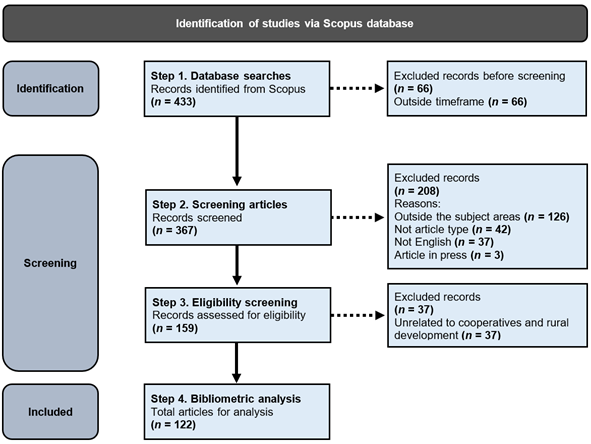
Figure 1. The bibliometric review process. Source: own elaboration of the PRISMA framework.
2.3. Data analysis
This paper used bibliometric analysis, using multiple software tools for better data visualization and interpretation, to systematically examine cooperative discourse in rural development. First, the Biblioshiny application, an interactive web-based extension of the Bibliometric package (Aria & Cuccurullo, 2017) in RStudio (RStudio Team, 2024), was used to conduct the essential key bibliometric analysis. This tool imports data in CSV format, which is suitable for multiple analytical processes such as network analysis, thematic mapping, and trend visualization in research. The interactive features of Biblioshiny, e.g., analyzing important authors, keywords, citation patterns, and thematic clusters, deepen the field's understanding. Second, VOSviewer version 1.6.20 (Van Eck & Waltman, 2024) was also used to implement network-based bibliometric visualization, e.g., co-authorship, keyword co-occurrence, and citation mapping. All data exported via Scopus using CSV were subsequently analyzed to locate clusters of strong research and major scholarly networks pertinent to cooperative work and studies associated with rural developments. Lastly, Microsoft Excel was used for trend analysis and customized mapping of relevant information, e.g., growth in publications, contributions from different geographical regions, and distributions of citations.
3.1. Bibliometric overview of studies
The literature shows significant growth, as evidenced by the Scopus database and bibliometric data. The area's influence, as reflected in the average number of citations per document, shows its scholarly impact and relevance to society. This development occurs due to strong cooperation among authors, with a high co-authorship rate and constantly increasing research production from year to year. Moreover, the co-authorship rate further underscores that the research network in this area is well developed. This research domain is becoming increasingly interdisciplinary, as evidenced by keywords emerging as themes. A summary of key bibliometric indicators is presented in Table 2.
Table 2. Description of the bibliometric data.
|
Description |
Results |
|
Timespan |
2000:2025 |
|
Sources |
89 |
|
Documents |
122 |
|
Annual growth rate % |
0 |
|
Document average age |
8.59 |
|
Average citations per document |
27.39 |
|
References |
6,100 |
|
Index keywords |
435 |
|
Author’s keywords |
444 |
|
Authors |
272 |
|
Authors of single-authored documents |
35 |
|
Single-authored documents |
35 |
|
Co-authors per document |
2.31 |
|
International co-authorship |
18.85 |
|
Article |
122 |
Source: Scopus data analyzed using Bibliometrix.
Figure 2 presents a steadily rising academic output of cooperatives and rural development literature between 2000 and 2025. The graph shows a marked surge in research activity beginning in the early 2020s, indicating rising interest in the field. This phenomenon reflects increased attention to global challenges such as rural poverty, agricultural sustainability, and economic disparities, in which cooperatives have come to the fore. The sharp rise in recent years is commensurate with cooperatives' growing recognition as strategic players in addressing socio-economic challenges in rural communities. The fitted trendline further highlights the exponential growth, driven by the development of different interdisciplinary approaches and the expansion of the field's themes over time. This steady growth further underscores the importance of cooperatives as an essential issue of intellectual and applied interest that runs through rural development research.
The figure also shows the average number of citations per year for articles on cooperatives and rural development from 2000 to 2025. While the count of articles continued to rise steadily with time, as shown in Figure 2A, the average citations per year display some disparity. Spikes in citations at the beginning of the 2000s and the mid-2020s point to the emergence of seminal pieces or a sudden spurt of interest in certain subtopics at those times. This pattern could be attributed to key global discussions on rural development strategies, Sustainable Development Goals, and the role of cooperatives in addressing rural economic challenges. Generally, the field remains academically relevant; however, citation impact varies across studies depending on their scientific and practical relevance. The decline may be due to a normal citation delay for more recent publications. With this, ongoing interaction and dissemination in this area remain necessary.
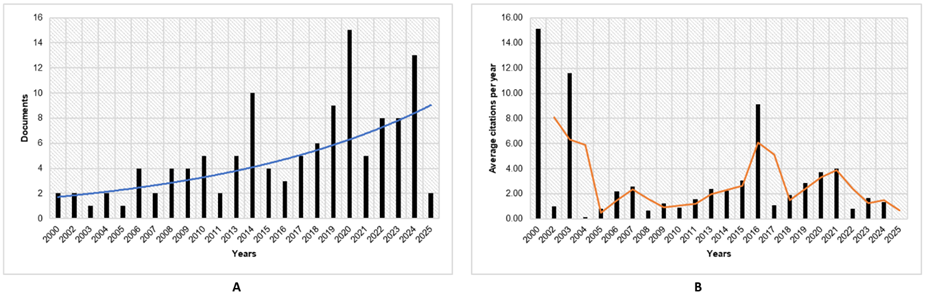
Figure 2. (A) Annual scientific productions. (B) Average citations per year. Source: own elaboration.
3.2. Key influential journals, authors, affiliations, countries, and articles
3.2.1. Leading journals
Figure 3 uses the number of published documents to rank the highest-ranked journals: Journal of Rural Studies and Sustainability (Switzerland) emerge with nine papers each, and Development in Practice, Journal of Co-operative Organization and Management, and Sociologia Ruralis each with 3. These journals were ranked based on their interdisciplinary features, including sustainability in rural livelihoods and cooperative models within the field. Other notable field journals include Annals of Public and Cooperative Economics, European Journal of Development Research, Food Policy, International Journal of Agricultural Sustainability, International Journal of Economic Research, Journal of Development Studies, Journal of International Development, Journal of Rural Development, Land Use Policy, New Medit, and Revista de Economica e Sociologia Rural. These channels discuss issues related to global development and rural policy challenges, reflecting a wide range of research perspectives. This spread elucidates the extreme diversity from local communities’ studies to macro policy frameworks.
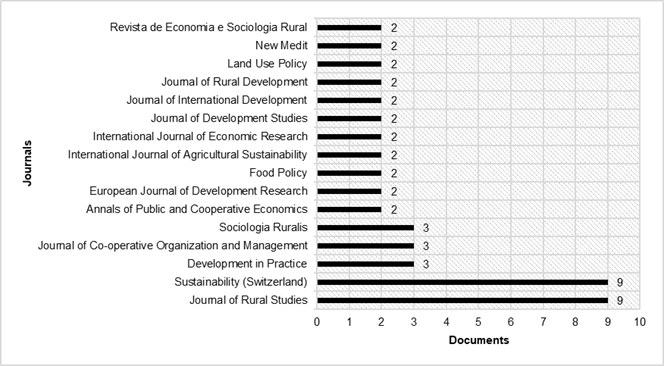
Figure 3. Leading journals. Source: own elaboration.
Table 3 ranks the top 10 cooperatives and rural development journals by h-index, g-index, m-index, and total citations (TC). The Journal of Rural Studies emerges as the most influential journal in this field, with the highest h-index and g-index of 7 and 9, respectively, indicating significant contributions. Sustainability (Switzerland) follows closely with a high m-index (0.857), suggesting a rapid rise in influence within a shorter period. Sociologia Ruralis scored high on citation count in articulating global and policy-oriented research issues. Even though the h- and g-indices for the Development in Practice and International Journal of Agricultural Sustainability are relatively low, there are indicators of contribution to particular niches in rural development. This distribution ranges from interdisciplinary work in sustainability to specialization in rural sociology and land-use policy. The metrics highlight that cooperatives and rural development scholarship are advancing in their pluralistic character, reflecting the pertinence of this field in addressing critical issues in the countryside.
Table 3. Top 10 most impactful journals.
|
Journal |
h-index |
g-index |
m-index |
TC |
|
Journal of Rural Studies |
7a |
9a |
0.35 |
288 |
|
Sustainability (Switzerland) |
6 |
9 |
0.857a |
114 |
|
Development in Practice |
3 |
3 |
0.15 |
169 |
|
Sociologia Ruralis |
3 |
3 |
0.115 |
845a |
|
Journal of Co-operative Organization and Management |
2 |
3 |
0.182 |
100 |
|
European Journal of Development Research |
2 |
2 |
0.286 |
22 |
|
Food Policy |
2 |
2 |
0.2 |
261 |
|
International Journal of Agricultural Sustainability |
2 |
2 |
0.167 |
83 |
|
Annals of Public and Cooperative Economics |
2 |
2 |
0.167 |
48 |
|
Journal of Development Studies |
2 |
2 |
0.111 |
61 |
a Top; TC = Total citations. Source: Scopus data analyzed using Bibliometrix.
3.2.2. Most influential authors
Table 4 indicates the most influential authors in this research area. Among them, Ku, Zhu, Bardsley, Ruben, Basu, and Sofer have the highest h- and g-indices, 2 and 2, respectively. This group is followed by authors such as Ahado, Hejkrlik, Garnevska, Ahumada, Guzmán, and Santos, who also demonstrate notable scholarly contributions. While research concentration is moderate among a few key contributors, Ruben stands out with the highest citation counts among the group. Diversity among the authors can be inferred from the collaborative and diverse academic engagement related to the theme, including, but not limited to, issues concerning sustainability, rural livelihoods, policy analysis, and cooperative economics. These contributions advance understanding of the roles and impacts of cooperatives, addressing various challenges of global rural development.
Table 4. Most influential authors.
|
Author |
Affiliation |
Country |
h-Index |
g-Index |
m-Index |
TC |
|
Ku, H. B. |
The Hong Kong Polytechnic University |
Hong Kong, China |
2a |
2a |
0.25 |
41 |
|
Zhu, J. |
Tongji University |
China |
2a |
2a |
0.182 |
42 |
|
Bardsley, D. K. |
University of Adelaide |
Australia |
2a |
2a |
0.167 |
56 |
|
Ruben, R. |
Wageningen University |
Netherlands |
2a |
2a |
0.118 |
263 |
|
Basu, P. |
University of South Florida |
USA |
2a |
2a |
0.111 |
31 |
|
Sofer, M. |
Bar Ilan University |
Israel |
2a |
2a |
0.1 |
72 |
|
Ahado, S. |
Czech University of Life Sciences Prague |
Czech Republic |
1 |
2a |
0.25 |
10 |
|
Hejkrlik, J. |
Czech University of Life Sciences Prague |
Czech Republic |
1 |
2a |
0.25 |
10 |
|
Garnevska, E. |
Massey University |
New Zealand |
1 |
2a |
0.083 |
6 |
|
Ahumada, P. |
University of Seville |
Spain |
1 |
1 |
0.5a |
19 |
|
Guzmán, C. |
University of Seville |
Spain |
1 |
1 |
0.5a |
19 |
|
Santos, F. J. |
University of Seville |
Spain |
1 |
1 |
0.5a |
19 |
a Top; TC = Total citations. Source: Scopus data analyzed using Bibliometrix.
3.2.3. Most productive affiliations
Figure 4 shows the leading academic institutions with the most articles on cooperatives and rural development. Based on the number of published documents, the Czech University of Life Sciences Prague has six papers, followed by Hunan University, the University of Jaén, and Zhejiang University, each with five papers. Later ranks of notable institutions included Humboldt-Universität zu Berlin, Tohoku University, University of Bologna, University of Gloucestershire, University of Malaga, and Wageningen University, with four published documents that show the institutions' focus on sustainability, agriculture, and rural development. These numbers show an international spread with major contributions by Asian and European institutions. Moreover, their contributions underscore the importance of rural development in an interdisciplinary context, drawing on insights from economics, sustainability, and community development to address pressing rural challenges.
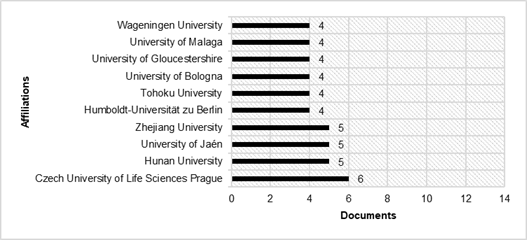
Figure 4. Publications by affiliations. Source: own elaboration.
3.2.4. Most productive countries
Figure 5 shows the contributions of different countries to the number of documents published on this topic. Spain leads the contributions with 26 papers, followed by China and the UK with 25 each. Contributions observed from India (23) and the USA (16) reflect academic interest in rural development and cooperative models within their socio-economic contexts. European countries like Germany (15) and Italy (10), as well as Australia (8) and Japan (8), indicate that developed and developing nations are keen to help solve problems in the countryside. Contributions from Brazil (13), a country with a large agricultural sector and rural economy, highlight the importance of cooperatives in addressing local development needs.
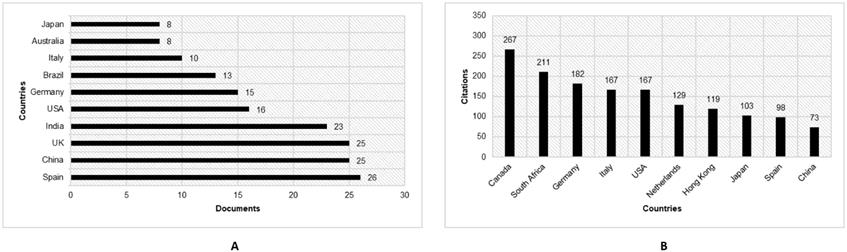
Figure 5. (A) Countries' production of relevant published documents. (B) Country citation counts over time. Source: own elaboration.
Figure 5 also ranks the top countries based on total citations in the cooperatives and rural development domain. Canada ranks at the top, with 267 citations, signifying leadership in producing widely referenced studies in this domain. Other countries, such as South Africa (211), Germany (182), Italy (167), and the USA (167), have excellent citations, indicating strong citation performance and the impact of their contributions. Netherlands (129), and Spain (98) are also crucial, while Hong Kong, China (119), Japan (103), and China (73) mark the entry of Asian countries into this space. These citation metrics indicate that research from these countries' sources is shaping global discourses on cooperatives and rural development, especially on topics such as sustainability, agricultural practices, and economic empowerment. Canada's strong presence is consonant with its best-in-class infrastructure research systems and its policy-directed approach to rural and cooperative systems, advancing academic thinking with practical applications.
3.2.5. Most cited articles
Table 5 indicates the top 10 most-cited papers on cooperatives and rural development. The most cited paper is by Marsden et al. (2000), with 788 citations, outlining approaches to the food supply chain and how they contribute to rural development, and citing the role that agricultural systems play in promoting rural livelihoods. Then, there is a study by MacDonald and Jolliffe (2003), which ranks second in cultural rural tourism in Canada, reflecting growing interest in tourism as a strategy for revitalizing traditional rural villages. Other highly cited works include Chagwiza et al. (2016), which stress the impacts of cooperative membership on technology adoption, welfare, and dairy performance among smallholders, highlighting the crucial role of cooperatives in improving household and agricultural productivity. Similarly, Murray et al. (2006), Ajates (2020), and Wuepper and Sauer (2016) explore the contribution of cooperatives to agricultural and rural development. Agricultural tourism-related studies (Kizos & Iosifides, 2007) further emphasize economic diversification options available in the rural areas. This table shows how highly cited works contribute to understanding the multifaceted roles of cooperatives in rural economies, thereby underscoring their importance in areas such as sustainable development, policy reforms, and economic empowerment.
Table 5. Top 10 most cited articles.
|
Rank |
Authors |
Article title |
Journal |
Total citations |
TC per year |
Normalized TC |
|
1 |
Marsden et al. (2000) |
Food supply chain approaches: Exploring their role in rural development |
Sociologia Ruralis |
788 |
30.31 |
2.00 |
|
2 |
MacDonald and Jolliffe (2003). |
Cultural rural tourism: Evidence from Canada |
Annals of Tourism Research |
267 |
11.61 |
1.00 |
|
3 |
Chagwiza et al. (2016) |
Cooperative membership and dairy performance among smallholders in Ethiopia |
Food Policy |
196 |
19.60 |
2.15 |
|
4 |
Murray et al. (2006) |
The future of fair trade coffee: Dilemmas facing Latin America's small-scale producers |
Development in Practice |
84 |
4.20 |
1.91 |
|
5 |
Kizos and Iosifides (2007) |
The contradictions of agrotourism development in Greece: Evidence from three case studies |
South European Society and Politics |
82 |
4.32 |
1.69 |
|
6 |
Hairong and Yiyuan (2013). |
Debating the rural cooperative movement in China, the past and the present |
Journal of Peasant Studies |
78 |
6.00 |
2.50 |
|
7 |
Ajates (2020) |
An integrated conceptual framework for the study of agricultural cooperatives: From repolitisation to cooperative sustainability |
Journal of Rural Studies |
73 |
12.17 |
3.26 |
|
8 |
Ruben et al. (2009) |
Measuring the impact of fair trade on development |
Development in Practice |
67 |
3.94 |
3.27 |
|
9 |
Wuepper and Sauer (2016) |
Explaining the performance of contract farming in Ghana: The role of self-efficacy and social capital |
Food Policy |
65 |
6.50 |
0.71 |
|
10 |
Ohe and Kurihara (2013) |
Evaluating the complementary relationship between local brand farm products and rural tourism: Evidence from Japan |
Tourism Management |
65 |
5.00 |
2.08 |
Source: Scopus data analyzed using Bibliometrix.
3.3. Scholarly collaborations and citation networks
Using the VOSviewer tool, Figure 6 illustrates the network of co-authorship relationships and collaboration clusters involving researchers on cooperatives and rural development. The presence of several clusters reflects the thematic and collaborative patterns in this domain. The blue cluster, led by Bijman J. and Ma W., focuses primarily on cooperative organization and management. However, the red group (e.g., Zeller, M., George, R.) represents studies focusing on rural banking or microfinance. The green cluster, represented by Liu Y. and Wu B., centers on rural transformation and sustainable farming. The purple cluster linked to Van Der Ploeg J.D. and Moulaert F. is closely related to themes of innovation and rural development.
Meanwhile, the co-authorship network is divided into two main clusters, colored differently: the first in green, with the central node representing Bardsley, Douglas K., and the second in red, featuring Song Bingjie, Xue Yanlong, and Wang Bing as leaders. The green cluster indicates close research collaboration between Douglas K. Bardsley and Annette M. Bardsley, suggesting a sustained partnership. Concurrently, the red cluster demonstrates a more tightly networked grouping of relationships between Robinson, Guy M., Song, Wang, and Xue, suggesting a working group that likely addresses specific topics. Douglas K. Bardsley's relationship with Wang Bing serves as a bridge between the two clusters, suggesting cross-collaboration that may reflect interdisciplinary or global work.
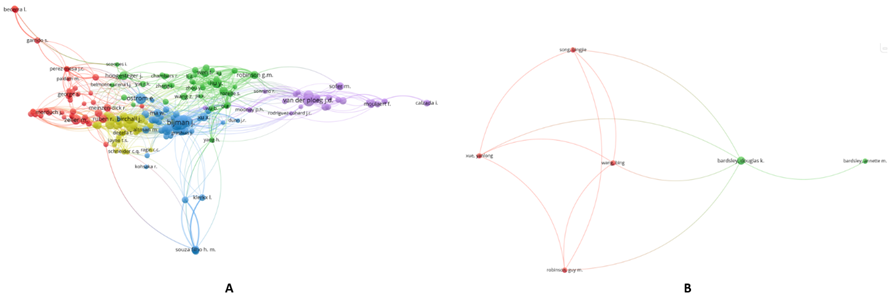
Figure 6. (A) Co-citation by authors. (B) Co-authorship by authors. Source: Scopus data analyzed using VOSviewer.
Table 6 shows the distribution of single-country publications (SCPs) and multi-country publications (MCPs) among the most productive countries in research on cooperatives and rural development. Spain leads in output, with a total of eight articles, followed by China and India with seven publications each. Within the group, China records the highest MCPs (42.9%), indicating strong international research cooperation. Italy follows with five articles, ranking second with the highest MCP percentage at 40%, reflecting its increasing integration into global research networks. Australia and Germany also reveal high international collaboration with their MCPs of 33.3%.
Table 6. Most productive countries’ collaborations.
|
No. |
Country |
Articles |
SCP |
MCP |
MCP % |
|
1 |
Spain |
8 |
7 |
1 |
12.5 |
|
2 |
China |
7 |
4 |
3 |
42.9 |
|
3 |
India |
7 |
6 |
1 |
14.3 |
|
4 |
Germany |
6 |
4 |
2 |
33.3 |
|
5 |
Italy |
5 |
3 |
2 |
40 |
|
6 |
UK |
5 |
4 |
1 |
20 |
|
7 |
USA |
5 |
5 |
0 |
0 |
|
8 |
Brazil |
4 |
4 |
0 |
0 |
|
9 |
Netherlands |
4 |
3 |
1 |
25 |
|
10 |
Australia |
3 |
2 |
1 |
33.3 |
Note: MCP = multi-country publication; SCP = singly country publication. Source: Scopus data analyzed using Bibliometrix.
In contrast, Brazil (0%) and the USA (0%) emphasize in-house research, reflecting their internal focus and capacities to address broader issues. The rise of multi-country collaborations speaks to the global relevance of research on cooperatives and rural development, where shared challenges such as sustainability, poverty alleviation, and rural economic empowerment require diverse, cross-border perspectives. This collaborative trend strengthens the field by fostering knowledge exchange and innovative approaches to rural challenges.
3.4. Evolution of key themes and topics in cooperatives and rural development
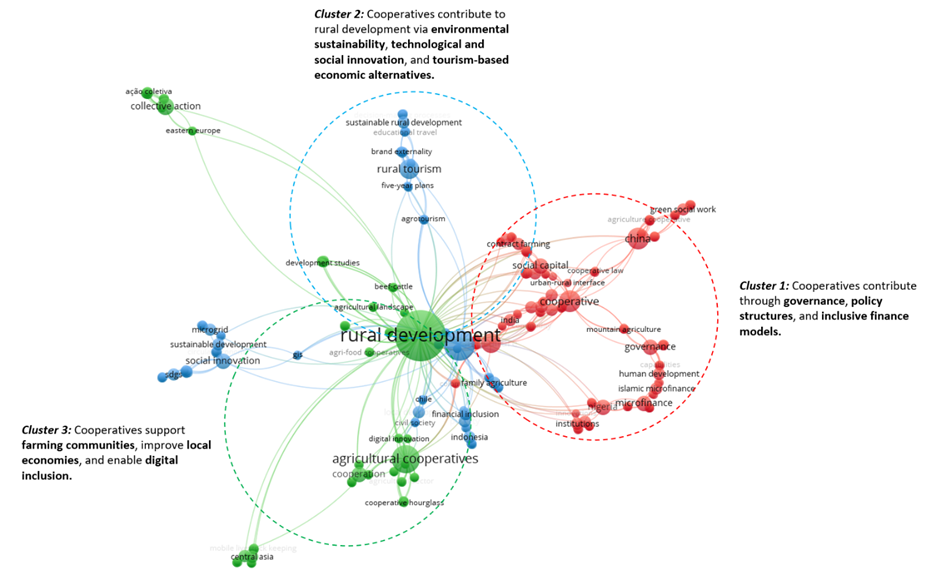
Figure 7. Visualization of key themes using the co-occurrence of keywords analysis. Source: Scopus data analyzed using VOSviewer.
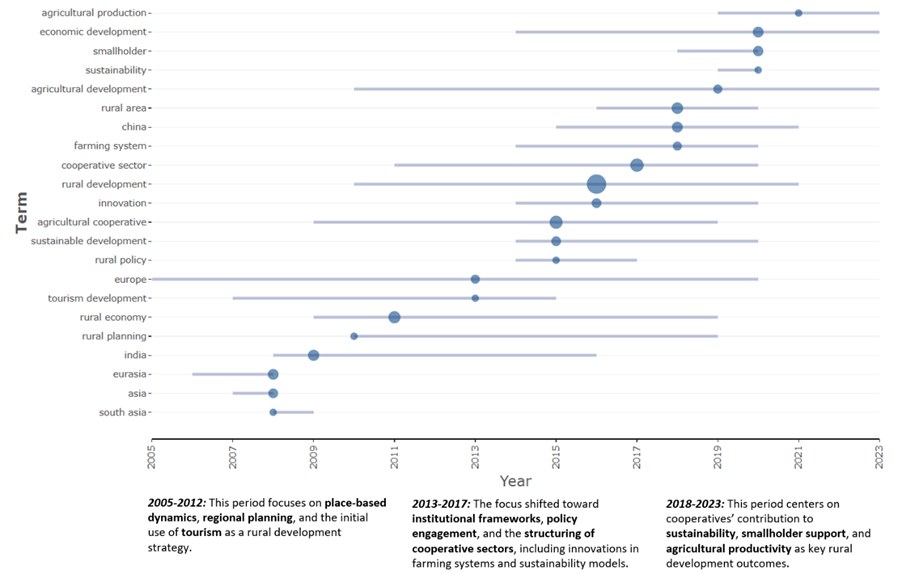
Figure 8. Visualization of trend topics. Source: Scopus data analyzed using Bibliometrix.
Figure 9 presents the three emerging themes that represent the intellectual terrain of rural and cooperative development research. The green cluster centers on community-based mechanisms and farm-family organization. The theme emphasizes the social foundations of rural cooperatives through keywords like “family agriculture” and “collective action.” Brazilian family agriculture cooperatives enhance the quality of rural life through solidarity economy firms that integrate social, economic, and environmental sustainability (Telles et al., 2024). In contrast, the red cluster, roughly centrally positioned on the map, focuses on the role that tourism can play in sustainable rural development, especially when institutionalized through forms of cooperation—an emerging but hitherto marginal field of study. Cooperatives are emerging as central enablers of rural tourism through community-oriented agrotourism and cultural activities that revitalize local economies through cooperative, place-based development (Kizos & Iosifides, 2007; MacDonald & Jolliffe, 2003). The blue cluster, on the other hand, encompasses more advanced studies examining the institutional types of cooperatives, particularly in agriculture, and their role in supporting local development. Cooperatives stimulate local economies by encouraging the production of farm produce and filling market inefficiencies (Ilbery et al., 2010). The three clusters illustrate how scholarship evolves from central people-related practices to institutional forms and cross-sectoral innovation.
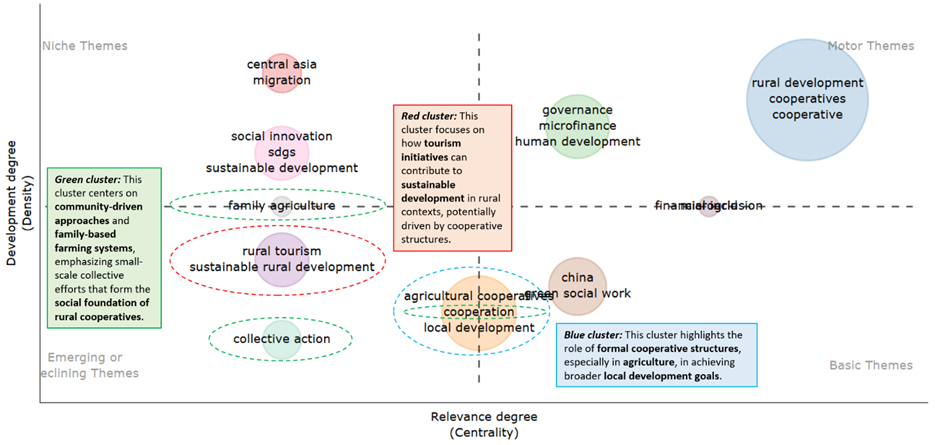
Figure 9. Visualization of emerging themes using the thematic map. Source: Scopus data analyzed using Bibliometrix.
Drawing on this bibliometric review, this paper identifies critical areas that contribute significantly towards advancing a comprehensive understanding of cooperatives' role in fostering rural development.
First, Spain, China, and the UK contributed the most to research on cooperatives and rural development, with the highest output of documents. Spain has a rich tradition of cooperative movements, especially in agriculture and industry, which fuels both academic interest and practical research (Ajates, 2020). Spain also has specialized research centers and networks that focus on the social economy, cooperatives, and rural development. China and the UK are the leaders in the production of global scientific knowledge (Lee & Haupt, 2021). This leadership reflects strong research infrastructures and policy priorities of these countries, where cooperatives play a crucial role in rural economic development. In particular, China actively promotes research on cooperatives through its government policies, academic institutions, and funding programs to improve rural and agricultural development (Qu et al., 2023). The country illustrates the global applicability of cooperative approaches for tackling rural issues, as evidenced in its MCP. Conversely, contributions from countries such as the UK, Germany, and India highlight the significance of cooperatives in fostering rural development worldwide and the global reach of this field of study (Adderley, 2024; Martens et al., 2021; Nath, 2021).
Second, in network visualizations, many strong co-authorship patterns arise from key nodes, such as the connections between authors Douglas K. Bardsley and Annette M. Bardsley, enabling the integration of interdisciplinary research with a closer understanding of the complex challenges of rural development. High percentages of MCPs in China, Italy, Germany, and Australia imply that they must collaborate internationally to improve the quality and impact of their research. Major European systems, including Germany, have experienced increased research output and international collaborations over the last decade (Kwiek, 2021). Similarly, China has shown growing international collaboration, influence, and contributions to research in the social sciences, and has expanded its role in the global academic landscape over recent years (Demeter et al., 2024). Moreover, partnerships are important in improving cooperative models across different socio-economic contexts (Newell et al., 2015). These partnerships enable improvements in local cooperative practices. Innovation and knowledge sharing thereby contribute to the sustainability and resilience of cooperatives worldwide.
Third, cooperatives play a dynamic and multifaceted role in rural development. The theming cluster—governance and inclusive finance, sustainability and innovation, and local economic empowerment—demonstrates how cooperatives adapt to meet diverse rural needs by leveraging institutional, social, and technological strategies. It has also increasingly shifted from place-based revitalization efforts toward more institutionalized policy involvement, leading to its present emphasis on concrete development outcomes, such as smallholder development (Ajates, 2020) and resource efficiency (Ilbery et al., 2010; Ma & Zhu, 2020). These changes prove that cooperatives are not static institutions but rather responsive ones that adapt to emerging rural challenges through policy reform, grassroots-based participation, and innovation (Santos et al., 2024). The salience of nations such as Switzerland, China, the United Kingdom, Greece, France, and Egypt in such debates also underscores the cross-national generalizability of cooperative approaches and offers regional insights. The findings thus warrant ongoing policy attention and scholarly investigation to enhance the adaptive capacity and development impact of cooperatives amid prevailing challenges, such as climate change, the digital revolution, and rural population exodus.
Lastly, the bibliometric results highlight three emerging themes for future research. There is an increasing focus on grassroots, farm-family cooperatives, highlighting the long-term relevance of socially embedded, bottom-up solutions framed in localized rural realities—emphasizing the importance of family farming and community self-organization, as well as supportive policies, particularly in instances such as Brazil (Telles et al., 2024). There is also a focus on cooperative-organized rural tourism, which holds the promise of a positive integration of cultural conservation, economic diversification, and cooperative entrepreneurship (Kizos & Iosifides, 2007; MacDonald & Jolliffe, 2003). This area requires further exploration of the potential of place-based tourism-driven inclusive development. At the same time, institutional innovation also gains more prominence as a necessary step to acknowledge cooperatives as innovative organizational forms that shape markets, governance, and territorial planning. Such cross-cutting themes entail a paradigm shift from independent cooperative practices towards innovative, cross-sectoral systems.
This bibliometric analysis reveals a dynamic and robust body of literature on cooperatives and rural development, characterized by global collaborations and diverse thematic pathways. Spain, China, and the UK are leading contributors, reflecting an enabling policy environment, research centers, and pragmatic development agendas. The frequency of cross-country co-authorship and multi-country publications captures the global applicability and interconnectedness of collaborative models as rural solutions. Thematically, cooperatives are depicted as responsive institutions engaged in governance reform, inclusive finance, sustainability, and rural empowerment, with new areas of interest in grassroots innovations, rural tourism, and institutional transformation. With these, there should be a sustained policy interest and scholarly engagement with cooperatives as they emerge as critical means of addressing major global issues, such as climate change, digitalization, and rural population movements.
The author declares no conflict of interest.
The data supporting the findings of this study are restricted and not publicly available. However, the author will provide this data upon request to interested readers.
During the preparation of this work, the author used Grammarly and ChatGPT to improve the fluency, clarity, and quality of the manuscript. After using the service, the author reviewed and edited the content as needed and took full responsibility for the published article.
Abdelrahman, T. (2017). Factors affecting farmers benefits from agricultural cooperatives services: The case of Kafrelsheikh Governorate, Egypt. International Journal of Economic Research, 14(10), 129-144.
Adderley, I. (2024). The UK co-operative movement today. Journal of Co-operative Studies, 57(3), 5-16. https://doi.org/10.61869/PFVQ7976.
Afranaa Kwapong, N., & Hanisch, M. (2013). Cooperatives and poverty reduction: A literature review. Journal of Rural Cooperation, 41(2), 114-146. https://doi.org/10.22004/ag.econ.249620.
Ajates, R. (2020). An integrated conceptual framework for the study of agricultural cooperatives: From repolitisation to cooperative sustainability. Journal of Rural Studies, 78, 467-479. https://doi.org/10.1016/j.jrurstud.2020.06.019.
Altman, M. (2015). Cooperative organizations as an engine of equitable rural economic development. Journal of Co-operative Organization and Management, 3(1), 14-23. https://doi.org/10.1016/j.jcom.2015.02.001.
Amiruddin, M. Z. B., Samsudin, A., Samsudin, A., Coştu, B., & Prahani, B. K. (2025). Scientific mapping and trend of conceptual change: A bibliometric analysis. Social Sciences & Humanities Open, 11, 101208. https://doi.org/10.1016/j.ssaho.2024.101208.
Aria, M., & Cuccurullo, C. (2017). bibliometrix: An R-tool for comprehensive science mapping analysis. Journal of Informetrics, 11(4), 959-975. https://doi.org/10.1016/j.joi.2017.08.007.
Bardsley, D. K., & Bardsley, A. M. (2014). Organising for socio-ecological resilience: The roles of the mountain farmer cooperative Genossenschaft Gran Alpin in Graubünden, Switzerland. Ecological Economics, 98, 11-21. https://doi.org/10.1016/j.ecolecon.2013.12.004.
Bijman, J., & Wijers, G. (2019). Exploring the inclusiveness of producer cooperatives. Current Opinion in Environmental Sustainability, 41, 74-79. https://doi.org/10.1016/j.cosust.2019.11.005.
Buang, M., & Abu Samah, A. (2020). Systematic review of factors influencing the effectiveness of the co-operative board. REVESCO. Revista de Estudios Cooperativos, 136, e71855. https://doi.org/10.5209/reve.71855.
Candemir, A., Duvaleix, S., & Latruffe, L. (2021). Agricultural cooperatives and farm sustainability-A literature review. Journal of Economic Surveys, 35(4), 1118-1144. https://doi.org/10.1111/joes.12417.
Chagwiza, C., Muradian, R., & Ruben, R. (2016). Cooperative membership and dairy performance among smallholders in Ethiopia. Food Policy, 59, 165-173. https://doi.org/10.1016/j.foodpol.2016.01.008.
Demeter, M., Goyanes, M., Háló, G., & Xu, X. (2024). The internationalization of Chinese social sciences research: Publication, collaboration, and citation patterns in economics, education, and political science. Policy Reviews in Higher Education, 9(1), 81-107. https://doi.org/10.1080/23322969.2024.2438240.
Donthu, N., Kumar, S., Mukherjee, D., Pandey, N., & Lim, W. M. (2021). How to conduct a bibliometric analysis: An overview and guidelines. Journal of Business Research, 133, 285-296. https://doi.org/10.1016/j.jbusres.2021.04.070.
Gava, O., Ardakani, Z., Delalić, A., Azzi, N., & Bartolini, F. (2021). Agricultural cooperatives contributing to the alleviation of rural poverty. The case of Konjic (Bosnia and Herzegovina). Journal of Rural Studies, 82, 328-339. https://doi.org/10.1016/j.jrurstud.2021.01.034.
Guinjoan, E., Badia, A., & Tulla, A. F. (2016). The new paradigm of rural development. Theoretical considerations and reconceptualization using the ‘rural web'. Boletín de la Asociación de Geógrafos Españoles, 71, 495-500. https://doi.org/10.21138/bage.2279.
Hairong, Y., & Yiyuan, C. (2013). Debating the rural cooperative movement in China, the past and the present. The Journal of Peasant Studies, 40(6), 955–981. https://doi.org/10.1080/03066150.2013.866555.
Hassan, W., & Duarte, A. E. (2024). Bibliometric analysis: A few suggestions. Current Problems in Cardiology, 49(8), 102640. https://doi.org/10.1016/j.cpcardiol.2024.102640.
Ilbery, B., Courtney, P., Kirwan, J., & Maye, D. (2010). Marketing concentration and geographical dispersion: A survey of organic farms in England and Wales. British Food Journal, 112(9), 962–975. https://doi.org/10.1108/00070701011074345.
Kizos, T., & Iosifides, T. (2007). The contradictions of agrotourism development in Greece: Evidence from three case studies. South European Society & Politics, 12(1), 59-77. https://doi.org/10.1080/13608740601155443.
Korzeb, Z., Niedziółka, P., Szpilko, D., & De la Torre, A. (2024). A bibliometric analysis of ESG performance in the cooperative banks: From the current status to future directions. Economics and Environment, 2, 809. https://doi.org/10.34659/eis.2024.89.2.809.
Kwiek, M. (2021). What large-scale publication and citation data tell us about international research collaboration in Europe: Changing national patterns in global contexts. Studies in Higher Education, 46(12), 2629-2649. https://doi.org/10.1080/03075079.2020.1749254.
Lee, J. J., & Haupt, J. P. (2021). Scientific globalism during a global crisis: Research collaboration and open access publications on COVID-19. Higher Education, 81(5), 949-966. https://doi.org/10.1007/s10734-020-00589-0.
Ma, W., & Zhu, Z. (2020). A note: Reducing cropland abandonment in China–do agricultural cooperatives play a role?. Journal of Agricultural Economics, 71(3), 929-935. https://doi.org/10.1111/1477-9552.12375.
MacDonald, R., & Jolliffe, L. (2003). Cultural rural tourism: Evidence from Canada. Annals of Tourism Research, 30(2), 307-322. https://doi.org/10.1016/S0160-7383(02)00061-0.
Marcis, J., Bortoluzzi, S. C., de Lima, E. P., & da Costa, S. E. G. (2019). Sustainability performance evaluation of agricultural cooperatives’ operations: A systemic review of the literature. Environment, Development and Sustainability, 21, 1111-1126. https://doi.org/10.1007/s10668-018-0095-1.
Marsden, T., Banks, J., & Bristow, G. (2000). Food supply chain approaches: Exploring their role in rural development. Sociologia Ruralis, 40(4), 424-438. https://doi.org/10.1111/1467-9523.00158.
Martens, K., Wolff, A., & Hanisch, M. (2021). Understanding social innovation processes in rural areas: Empirical evidence from social enterprises in Germany. Social Enterprise Journal, 17(2), 220-239. https://doi.org/10.1108/SEJ-12-2019-0093.
Murray, D. L., Raynolds, L. T., & Taylor, P. L. (2006). The future of fair trade coffee: Dilemmas facing Latin America's small-scale producers. Development in Practice, 16(2), 179-192. https://doi.org/10.1080/09614520600562397.
Nath, M. (2021). Do institutional transplants succeed? Regulating Raiffeisen cooperatives in South India, 1930-1960. Business History Review, 95(1), 59-85. https://doi.org/10.1017/S0007680520000884.
Newell, R., Dale, A., Herbert, Y., Duguid, F., Foon, R., & Hough, P. (2015). Trans-disciplinary research: An academic-practitioner partnership effort on investigating the relationship between the cooperative model and sustainability. International and Multidisciplinary Journal of Social Sciences, 4(1), 23-53. https://doi.org/10.17583/rimcis.2015.1384.
Ohe, Y., & Kurihara, S. (2013). Evaluating the complementary relationship between local brand farm products and rural tourism: Evidence from Japan. Tourism Management, 35, 278-283. https://doi.org/10.1016/j.tourman.2012.07.003.
Page, M. J., McKenzie, J. E., Bossuyt, P. M., Boutron, I., Hoffmann, T. C., Mulrow, C. D., Shamseer, L., Tetzlaff, J. M., Akl, E. A., & Brennan, S. E. (2021). The PRISMA 2020 statement: An updated guideline for reporting systematic reviews. International Journal of Surgery, 88, 105906. https://doi.org/10.1016/j.ijsu.2021.105906.
Pasara, M. T., Makochekanwa, A., & Dunga, S. H. (2021). The role of savings and credit cooperatives (SACCOs) on financial inclusion in Zimbabwe. Eurasian Journal of Business and Management, 9(1), 47-60. https://doi.org/10.15604/ejbm.2021.09.01.004.
Pranckutė, R. (2021). Web of Science (WoS) and Scopus: The titans of bibliographic information in today’s academic world. Publications, 9(1), 12. https://doi.org/10.3390/publications9010012.
Qorri, D., & Felföldi, J. (2024). Research trends in agricultural marketing cooperatives: A bibliometric review. Agriculture, 14(2), 199. https://doi.org/10.3390/agriculture14020199.
Qu, Y., Zhang, J., Wang, Z., Ma, X., Wei, G., & Kong, X. (2023). The future of agriculture: Obstacles and improvement measures for Chinese cooperatives to achieve sustainable development. Sustainability, 15(2), 974. https://doi.org/10.3390/su15020974.
Ranjbari, A., Ebrahimi, M. S., & Khedri, G. (2024). Philosophy and the role of cooperatives in the development of social capital. Case study: Rural women’s microcredit cooperatives in Iran. Boletín de la Asociación Internacional de Derecho Cooperativo, 65, 135-152. https://doi.org/10.18543/baidc.3059.
Rena, R. (2017). Cooperatives in South Africa: A review. Indian Journal of Science and Technology, 10(45), 1-12. https://doi.org/10.17485/ijst/2017/v10i45/117678.
Ribas, W. P., Pedroso, B., Vargas, L. M., Picinin, C. T., & Freitas Júnior, M. A. D. (2022). Cooperative organization and its characteristics in economic and social development (1995 to 2020). Sustainability, 14(14), 8470. https://doi.org/10.3390/su14148470.
RStudio Team. (2024). RStudio: Integrated development environment for R (Open source edition, AGPL v3) [Computer software]. Posit Software, PBC.
Ruben, R., Fort, R., & Zúñiga-Arias, G. (2009). Measuring the impact of fair trade on development. Development in Practice, 19(6), 777-788. https://doi.org/10.1080/09614520903027049.
Santos, F. J., Guzmán, C., & Ahumada, P. (2024). Assessing the digital transformation in agri-food cooperatives and its determinants. Journal of Rural Studies, 105, 103168. https://doi.org/10.1016/j.jrurstud.2023.103168.
Sarsale, M. (2019). Creating a financial viability model among cooperatives using management practices as predictors. Journal of Educational and Human Resource Development, 7, 14-23. https://doi.org/10.61569/dkkk6a86.
Sarsale, M. (2020). Measuring financial health of selected cooperatives in an ASEAN province using Altman model. Journal of Educational and Human Resource Development, 8, 80-93. https://doi.org/10.61569/67cath78.
Sarsale, M., & Kilongkilong, D. (2020). Management practices of multipurpose cooperatives operating in a Philippine province. Asia Pacific Journal of Multidisciplinary Research, 8(1), 16-26.
Saz-Gil, I., Bretos, I., & Díaz-Foncea, M. (2021). Cooperatives and social capital: A narrative literature review and directions for future research. Sustainability, 13(2), 534. https://doi.org/10.3390/su13020534.
Singh, V. K., Singh, P., Karmakar, M., Leta, J., & Mayr, P. (2021). The journal coverage of Web of Science, Scopus and Dimensions: A comparative analysis. Scientometrics, 126, 5113-5142. https://doi.org/10.1007/s11192-021-03948-5.
Su, Y., & Cook, M. L. (2020). Advances in agricultural cooperative research since 2007: A review of Chinese agricultural economics literature. Annals of Public and Cooperative Economics, 91(4), 519-543. https://doi.org/10.1111/apce.12273.
Tefera, D. A., Bijman, J., & Slingerland, M. A. (2017). Agricultural co‐operatives in Ethiopia: Evolution, functions and impact. Journal of International Development, 29(4), 431-453. https://doi.org/10.1002/jid.3240.
Telles, L. B., Macedo, L. M., & Bittencourt, J. V. M. (2024). ELECTRE-TRI multicriteria approach for measuring performance of rural co-operatives in Southwest Paraná, Brazil. Economies, 12(9), 233. https://doi.org/10.3390/economies12090233.
Tumenta, B. F., Amungwa, F. A., & Nformi, M. I. (2021). Role of agricultural cooperatives in rural development in the era of liberalization in the North West and South West regions of Cameroon. Journal of Agricultural Extension and Rural Development, 13(1), 69-81. https://doi.org/10.5897/JAERD2020.1211.
Van Eck, N. J., & Waltman, L. (2024). VOSviewer [Computer software]. Centre for Science and Technology Studies, Leiden University.
Wuepper, D., & Sauer, J. (2016). Explaining the performance of contract farming in Ghana: The role of self-efficacy and social capital. Food Policy, 62, 11-27. https://doi.org/10.1016/j.foodpol.2016.05.003.